The Czech Republic, long known for its industrial prowess and skilled workforce, stands at a crossroads. While automation is sweeping across Europe’s factories and offices, many Czech companies are deliberately maintaining lower levels of automation. At first glance, this may seem counterintuitive in an era dominated by robotics and artificial intelligence. However, a closer look reveals that low automation can, in fact, become a source of competitive advantage for Czech businesses. By leveraging unique strengths—such as adaptability, product customization, and workforce engagement—companies can thrive in ways that more heavily automated competitors may struggle to match.
This article explores the sometimes surprising ways that low automation can increase the competitiveness of Czech companies. Drawing on real data, industry examples, and a comparative perspective, we will examine how Czech firms can turn what might seem like a weakness into a distinctive edge.
The Czech Economic Landscape: A Context for Low Automation
The Czech Republic is often described as the “industrial heart of Europe.” According to the Czech Statistical Office, manufacturing contributes over 32% to the country’s GDP—well above the EU average of 16%. As of 2023, more than 1.2 million people are employed in manufacturing, representing nearly a quarter of the Czech workforce.
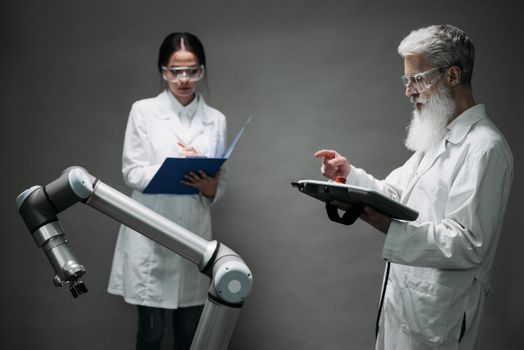
Despite this strong industrial base, the Czech automation rate lags behind Western European peers. According to the International Federation of Robotics (IFR), the Czech Republic boasted around 162 industrial robots per 10,000 employees in 2022. This figure is significantly lower than Germany’s 397 robots per 10,000 employees and even below the European average of 225. While some see this as a vulnerability, others argue it is a strategic choice shaped by the country’s unique economic structure, labor market, and industrial traditions.
Flexibility and Customization: Competing Where Automation Struggles
One of the key advantages of low automation is the ability to offer highly customized products and services. Automated production lines are optimized for high-volume, repetitive tasks. However, when clients demand tailored solutions or short production runs, the inflexibility of automated systems can become a limitation.
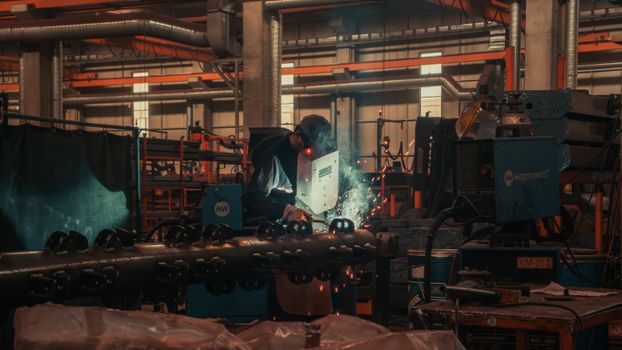
For example, many Czech firms in sectors like furniture, specialty machinery, and textiles continue to thrive on made-to-order production. These companies can rapidly adapt to changing customer requirements without the costly and time-consuming process of reprogramming robots or reconfiguring automated lines. A 2022 survey by the Confederation of Industry of the Czech Republic found that 41% of SMEs cited “high product variability” as a key reason for maintaining lower automation levels.
Moreover, the Czech tradition of craftsmanship—especially in areas like glassmaking, brewing, and precision engineering—remains in high demand. International clients often seek out Czech suppliers specifically for their ability to deliver bespoke, high-quality products that would be difficult or uneconomic to produce with full automation.
Human Capital: Leveraging Skilled Labor for Competitive Advantage
Czech companies benefit from a well-educated, technically skilled workforce. The World Economic Forum’s Global Competitiveness Report 2023 ranked the Czech Republic 31st globally for “skills of the workforce,” ahead of many countries with higher automation rates.
In low automation settings, employees are not just machine operators—they are problem solvers, innovators, and relationship-builders. This human-centered approach enables companies to offer services such as rapid prototyping, on-the-fly adjustments, and close collaboration with clients. For instance, Czech engineering firms frequently dispatch teams to customer sites for installation, troubleshooting, and customization—tasks that require flexibility and expertise beyond what machines can offer.
Furthermore, engaging workers in meaningful tasks contributes to higher job satisfaction and lower turnover. According to a 2023 survey by STEM/MARK, 68% of Czech employees in low-automation workplaces reported feeling “valued for their expertise,” compared to just 45% in highly automated environments.
Cost Efficiencies in Low-Volume and Niche Markets
While automation can drive down costs in mass production, it often requires significant upfront investment in machinery, programming, and maintenance. For Czech companies operating in specialized or lower-volume markets, these costs can outweigh the benefits.
Consider the following comparative overview of typical investment costs:
| Production Type | Initial Automation Investment (€) | Break-even Volume (units/year) | Workforce Needed |
|---|---|---|---|
| Highly Automated Mass Production | 1,000,000+ | 100,000+ | Minimal (mainly supervisors, technicians) |
| Low-Automation, Flexible Production | 100,000 - 300,000 | 10,000 - 20,000 | Larger, skilled workforce |
| Manual/Artisanal Production | <50,000 | <2,000 | Highest, artisanal skills |
For many Czech SMEs, particularly those serving niche markets, low automation allows them to remain profitable at lower production volumes. They can adjust output quickly in response to demand fluctuations without being burdened by the amortization of expensive machinery. This “lean and responsive” approach is vital in industries where orders can be unpredictable or highly seasonal.
Mitigating Global Risks: Resilience Through Low Automation
The COVID-19 pandemic, supply chain disruptions, and geopolitical tensions have highlighted the vulnerabilities of highly automated, globalized production systems. When factories rely on precision-tuned automated lines, even a minor component shortage or software glitch can bring production to a halt.
Czech companies with lower automation levels have often shown greater resilience in these turbulent times. Their ability to reassign human labor, repurpose equipment, and find creative solutions has helped many businesses weather supply shocks or pivot to new products quickly. For example, during the height of the pandemic in 2020, several Czech textile firms were able to rapidly switch from apparel to mask production—something that would have been far more difficult in a fully automated setting.
This agility also extends to responding to new regulatory requirements or shifts in consumer preferences. Companies that rely more on human skills can more easily comply with new quality or sustainability standards without major changes to their production infrastructure.
Building Stronger Client Relationships and Local Ecosystems
Another less obvious, but crucial, advantage of low automation is the ability to forge closer relationships with clients. In industries where customization, ongoing support, or co-development are valued, Czech companies can differentiate themselves through personal service and technical expertise.
For example, Czech manufacturers of industrial equipment often work directly with their customers throughout the design, installation, and after-sales process. This partnership approach builds loyalty and opens up opportunities for repeat business, cross-selling, and valuable feedback. According to the Czech Chamber of Commerce, 56% of SMEs that prioritize client collaboration report higher customer retention rates than those relying on standardized, automated offerings.
Furthermore, by retaining more jobs and skills locally, low automation supports the development of robust regional supply chains. Czech companies are less dependent on distant suppliers for specialized parts or maintenance, which not only improves reliability but also strengthens the broader economic ecosystem. This can be a powerful selling point for clients seeking reliability and local accountability.
Future Outlook: Balancing Tradition and Innovation
The future of Czech competitiveness will not rest on rejecting automation altogether, but on finding the optimal balance between technology and human ingenuity. As the Fourth Industrial Revolution accelerates, companies will need to selectively adopt automation where it makes sense—such as data analytics, quality control, or logistics—while preserving the human-driven strengths that set them apart.
Government support programs, such as the “CzechInvest” agency’s focus on digital upskilling and the EU’s Horizon Europe initiatives, are encouraging Czech firms to experiment with “smart” low automation—blending digital tools with traditional craftsmanship. Early adopters in areas like advanced prototyping, sustainable materials, and customer-driven product development are showing how Czech companies can carve out a distinctive, competitive niche on the global stage.