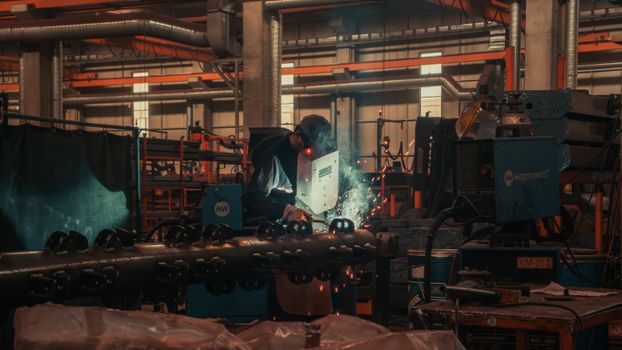
Low Automation: Key to Boosting Local Economies
The digital revolution has reshaped industries with automation, streamlining processes and boosting productivity. Yet, contrary to the prevailing narrative that more automation is always better, an emerging body of evidence points to a compelling alternative: low automation. Especially in local and regional economies, low automation offers a distinct path forward—one that values skilled labor, fosters entrepreneurship, and builds community resilience. This article explores how low automation can become a powerful lever for local economic growth, offering real-world examples, data-driven insights, and a fresh perspective on future development.
The Economic Power of Low Automation: An Overview
Automation has undoubtedly transformed the global economic landscape. According to the International Federation of Robotics, there were over 3.5 million industrial robots in operation worldwide by 2023, with rapid growth expected in the coming years. However, the impact of automation is not uniform. While high automation benefits large-scale manufacturers and tech-driven enterprises, it can present challenges for small businesses and local economies.
Low automation refers to production processes that intentionally maintain a significant human component, rather than fully automating every task. This approach empowers workers, supports local entrepreneurship, and keeps more economic value within communities. For example, in 2022, small businesses accounted for 44% of U.S. economic activity, according to the U.S. Small Business Administration. Many of these businesses operate with low to moderate levels of automation, relying on skilled labor and personal customer relationships.
By focusing on low automation, communities can:
- Maximize local employment opportunities - Retain and circulate wealth within the region - Foster innovation rooted in local needs - Build economic resilience against global supply chain shocksHow Low Automation Creates Local Jobs and Skills
One of the most direct benefits of low automation is job creation. Highly automated facilities may require fewer workers, but low automation environments can employ a larger, more diverse workforce. In fact, a 2021 study by the Brookings Institution found that regions with lower automation rates displayed higher employment growth in small- and medium-sized businesses.
Local economies with low automation often see:
- Increased demand for skilled trades and craft-based professions - More entry-level and transitional work opportunities - Expanded on-the-job training and apprenticeship programsTake, for example, the craft brewing industry in the United States. While large breweries utilize advanced automation, many local craft breweries rely on manual processes for brewing, bottling, and distribution. In 2022, the craft brewing sector supported over 400,000 jobs nationwide, a stark contrast to the highly automated mega-breweries that employ far fewer people per barrel produced.
Moreover, low automation encourages skill development that is often place-specific—such as artisanal baking, woodworking, or specialty food production—ensuring that expertise remains a valuable local asset rather than being outsourced or replaced by machines.
Boosting Local Business Ecosystems and Entrepreneurship
Low automation doesn’t just create jobs; it fosters the conditions for local entrepreneurship to flourish. When production remains accessible to individuals and small teams, barriers to entry are lower. This allows more people to start businesses, experiment with new products, and respond quickly to local market needs.
Consider the example of local food markets. Farmers using low-automation techniques—such as hand-harvesting, small-batch processing, and direct-to-consumer sales—can offer unique, high-quality goods that differentiate them from large agribusinesses. According to the National Farmers Market Coalition, there were over 8,600 farmers markets in the U.S. as of 2023, generating approximately $1.3 billion in annual sales. Most of these markets are powered by local producers with low levels of automation, contributing directly to local economies.
Additionally, low automation supports supporting industries, such as equipment repair, packaging, and logistics, further multiplying its positive impact on the local business ecosystem.
Community Wealth Retention and Economic Circulation
One often-overlooked advantage of low automation is its role in keeping wealth within local communities. When businesses use low automation, they typically spend more on local labor, services, and materials. This money circulates through the local economy, supporting other businesses and public services.
A study by the American Independent Business Alliance found that for every $100 spent at a local business, $68 remains in the community, compared to just $43 for national chains—most of which operate with higher automation and centralized supply chains. By prioritizing human labor and local sourcing, low automation businesses can boost the local economic multiplier effect.
Furthermore, the retention of wealth locally can lead to:
- Increased tax revenues for local governments - Greater investment in community infrastructure - Enhanced support for local schools and nonprofitsThese effects, while sometimes less visible than immediate job creation, are crucial for building long-term community prosperity.
Low Automation as a Hedge Against Economic Disruption
Globalization and automation have made supply chains more efficient but also more fragile. The COVID-19 pandemic exposed vulnerabilities in highly automated, globally dependent industries. In contrast, regions with robust low-automation sectors—such as local food production, construction, and repair services—demonstrated remarkable resilience.
For example, during 2020’s supply chain disruptions, many local bakeries and small food processors were able to adapt quickly, pivoting to new products or local delivery. Their reliance on human labor and local sourcing made them less dependent on international logistics networks. According to the Institute for Local Self-Reliance, communities with a higher density of small, low-automation businesses recovered jobs more quickly after the initial economic shock.
By maintaining a balance between efficiency and flexibility, low automation provides a buffer against economic volatility, giving communities greater control over their own destinies.
Comparing Low Automation and High Automation in Local Economic Impact
To understand the distinct advantages of low automation for local economies, it is useful to compare it directly with high automation across key metrics.
| Metric | Low Automation | High Automation |
|---|---|---|
| Local Job Creation | High – supports diverse roles | Low – fewer, specialized jobs |
| Economic Multiplier Effect | Strong – more money stays local | Weaker – profits often exit community |
| Entrepreneurship | Accessible – lower barriers to entry | Challenging – high capital requirements |
| Community Resilience | High – adapts to local needs, less supply chain risk | Lower – vulnerable to external shocks |
| Skill Development | Broad, place-based skills | Technical, often specialized skills |
This comparison highlights why low automation is uniquely suited to empowering local economies, especially in regions seeking sustainable, inclusive growth.
Real-World Success Stories: Low Automation in Action
Several regions around the world have embraced low automation to revitalize their economies:
- In Vermont, USA, a focus on artisan cheese and craft brewing has helped stabilize rural economies, creating over 2,500 new jobs in the past decade. - The Emilia-Romagna region in Italy is renowned for its “industrial districts” of small, family-run manufacturers using low automation to produce luxury goods, employing over 500,000 people in businesses averaging just 10-20 workers each. - In Japan, the town of Tsubame-Sanjo sustains its local economy by blending traditional metalworking skills with modern, but not fully automated, production, supporting over 4,000 small-scale enterprises.These examples demonstrate that with the right support, low automation can be a dynamic engine for local prosperity.
Final Thoughts: Harnessing Low Automation for Local Economic Growth
While automation will continue to play an important role in the global economy, communities seeking inclusive, resilient growth should not overlook the value of low automation. By fostering job creation, supporting entrepreneurship, circulating wealth locally, and providing a hedge against economic disruptions, low automation offers a blueprint for sustainable development.
Policy makers, business leaders, and community advocates can take action by:
- Supporting workforce development in skilled trades and crafts - Encouraging local sourcing and procurement policies - Investing in infrastructure that benefits small, low-automation businessesAs the world faces new economic challenges and opportunities, low automation stands out as a key strategy for boosting local economies—one that celebrates human ingenuity, community ties, and sustainable prosperity.