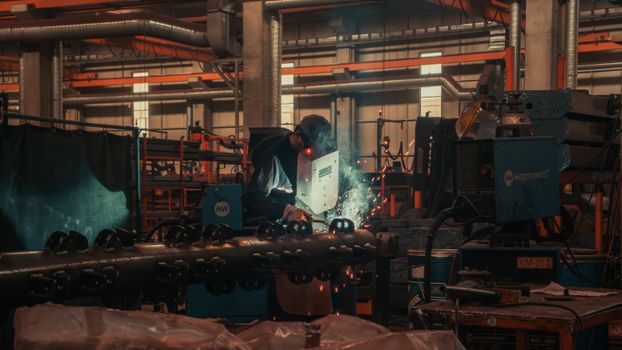
Manufacturing has long been at the forefront of technological innovation, with automation promised as the key to greater efficiency and productivity. However, a growing number of enterprises are finding unique advantages by strategically limiting automation. Low automation does not mean rejecting technology—it means selectively integrating it to balance human skill, flexibility, and cost-effectiveness. Through a series of illuminating case studies, this article explores how manufacturing companies have successfully implemented low automation, highlighting the measurable benefits and practical lessons learned along the way.
The Rationale Behind Low Automation in Manufacturing
While the global manufacturing sector invested over $200 billion in industrial automation in 2023, according to the International Federation of Robotics (IFR), not all enterprises have rushed to fully automate. For many, low automation is a conscious strategic choice rather than a limitation. The rationale includes:
- Flexibility: Manual processes allow for easier adaptation to changing product types, volumes, or custom orders. - Cost Management: High initial automation investments can be prohibitive for small to medium-sized manufacturers. - Job Preservation: Human labor remains essential for skilled tasks, quality control, and maintaining community employment. - Product Quality: Some products, particularly those requiring artisanal skill or sensitive handling, benefit from a hands-on approach.A 2022 survey by Deloitte found that 56% of manufacturers with less than 250 employees prefer partial automation, citing adaptability and workforce satisfaction as leading reasons.
Case Study 1: Custom Furniture Manufacturer "Oak & Artisan"
Founded in 2014, Oak & Artisan is a medium-sized Czech furniture company specializing in custom woodwork. Rather than automating every step, the company chose a hybrid approach: CNC machines assist with initial cuts, but skilled craftsmen handle assembly, finishing, and detailing.
Key outcomes after five years of this low automation model:
- Lead time for custom orders reduced by 20% thanks to partial automation in cutting. - Product returns due to quality issues dropped from 5% to 1.2%. - Employee retention increased by 16%, with workers citing job satisfaction and pride in craftsmanship. - Annual revenue grew from €1.3 million in 2017 to €2.2 million in 2022."Customers appreciate the human touch," says CEO Petra Nováková. "Our craftsmen can accommodate last-minute design changes that a fully automated system couldn't manage without significant delays or costs."
Case Study 2: Small-Batch Food Processor "Harvest Delights"
Harvest Delights, a UK-based producer of gourmet jams and preserves, operates with a staff of 22. The company uses semi-automated mixers and filling machines, but all fruit preparation, flavor blending, and quality checks are done by hand.
Results from this approach include:
- Product recall incidents have remained at zero over three years, attributed to meticulous manual inspection. - The company can launch new seasonal flavors within two weeks, compared to an industry average of six weeks for fully automated competitors. - Production costs are 18% higher than large-scale automated rivals, but Harvest Delights offsets this through premium pricing and a loyal customer base."Low automation lets us experiment and respond to trends instantly," explains founder Elsie Martin. "It also gives our brand a story that resonates with health-conscious and ethically minded consumers."
Case Study 3: Electronics Assembly Firm "MicroFlex Circuits"
MicroFlex Circuits is a Polish company specializing in small-batch, custom-designed printed circuit boards (PCBs) for medical and research applications. Rather than automating their entire line, they employ selective automation for repetitive soldering, while skilled technicians handle testing, troubleshooting, and final assembly.
Their model delivers:
- 99.6% on-time delivery rate, even for highly customized orders. - Reject rates sit below 0.5%, compared to the 2-3% typical of large automated PCB plants. - Ability to cater to clients requiring design changes during production—a key differentiator in the prototyping market.Managing director Tomasz Zielinski notes, "For high-mix, low-volume production, full automation just doesn't make sense. Our technicians' expertise is essential for quality and flexibility."
Comparative Overview: Low Automation vs. Full Automation in Manufacturing
To better understand the trade-offs, consider the following table comparing key metrics between low automation and full automation approaches:
| Metric | Low Automation | Full Automation |
|---|---|---|
| Initial Investment | Lower (10-40% of full automation cost) | High (can exceed $5 million for midsize plants) |
| Workforce Size | Higher (60-80% human labor) | Lower (20-40% human oversight) |
| Production Flexibility | High (easy to switch product types) | Low to Medium (requires reprogramming and downtime) |
| Customization Capability | Excellent | Limited |
| Output Consistency | Moderate to High (depends on training) | Very High |
| Average Product Lead Time | Short to Moderate | Shortest for mass production, longer for custom runs |
| Quality Control | Human oversight, adaptable | Automated, may miss nuanced defects |
As the data shows, low automation often excels where flexibility, customization, and human quality control are priorities, while full automation dominates in high-volume, standardized production.
Case Study 4: Textile Manufacturer "Heritage Looms"
Heritage Looms, a family-owned textile producer in India, faced a critical decision in 2018: invest heavily in automation or preserve their traditional weaving techniques. They opted for a low automation model, using mechanized looms for basic weaving but relying on artisans for pattern design, dyeing, and finishing.
By 2023, the results were striking:
- Export sales increased by 34%, driven by demand for traditionally crafted fabrics. - The company maintained employment for over 250 skilled artisans, supporting local communities. - Defect rates remained low at 1.1%, compared to 5% prior to partial automation. - Heritage Looms won three international design awards for unique and intricate patterns.CEO Priya Mehra says, "Our blend of tradition and technology is our competitive edge. Customers want authenticity, and our artisans deliver that in every meter of fabric."
Lessons Learned from Successful Low Automation Case Studies
The experiences of Oak & Artisan, Harvest Delights, MicroFlex Circuits, and Heritage Looms reveal several common themes that can inform other manufacturing enterprises:
1. $1 All four companies automate repetitive, labor-intensive, or hazardous tasks but retain human involvement for value-added processes. 2. $1 Skilled labor is essential for low automation to succeed. Each company invested in ongoing training and knowledge transfer, ensuring quality and adaptability. 3. $1 Low automation provides a narrative around craftsmanship, quality, and community impact—a powerful marketing tool, especially in premium markets. 4. $1 While operating costs may be higher than in fully automated settings, the ability to command higher prices, reduce defects, and retain loyal staff can offset these expenses. 5. $1 Smaller batch sizes, quick product switches, and rapid innovation are all easier in low automation environments.Challenges and Future Outlook for Low Automation in Manufacturing
Despite the successes, low automation is not without its challenges:
- $1 As younger generations opt for tech-based careers, finding skilled artisans or technicians can be difficult. - $1 For commodity goods, price pressures remain intense. - $1 Growing beyond a certain size may require additional automation or changes in workflow.However, industry analysts predict that niche markets for customized, high-quality, or artisanal products will continue to expand. According to McKinsey’s 2023 Manufacturing Insights Report, demand for customizable goods is projected to grow 8% annually through 2028, driven by consumer preference for unique products and ethical sourcing.
Manufacturers who find the right balance between automation and human expertise are poised to thrive in this evolving landscape.
Final Reflections: The Enduring Value of Low Automation Case Studies
The case studies presented here demonstrate that low automation is not a step backward but a strategic choice that can deliver significant business advantages. Enterprises that focus on flexibility, quality, customization, and employee engagement consistently outperform expectations—even in a world racing toward greater automation. For manufacturers considering their path forward, these stories provide compelling evidence that "less" can sometimes mean "more"—more customer loyalty, more innovation, and more sustainable growth.