Low automation is often discussed as a disadvantage in the global race for efficiency and productivity. However, for Czech companies, maintaining a lower level of automation has unexpectedly become a fertile ground for innovation. While many economies push toward complete digitization and robotic integration, the Czech business environment has taken a more measured approach. This unique stance is not merely a result of tradition or resource limitations—it is also a deliberate strategy that fosters creative problem-solving, agile adaptation, and the development of original products and services.
This article explores how low automation contributes to the development of innovations in Czech companies, drawing on real-world examples, statistical insights, and expert opinions. We will examine why this approach works, how it compares to more automated systems, and what it means for the future of Czech industry.
The Czech Approach to Automation and Innovation
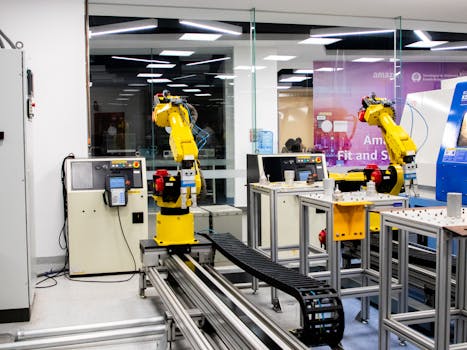
Czechia, historically known for its strong industrial base and skilled workforce, has not followed the same automation trajectory as some of its Western European neighbors. According to data from the International Federation of Robotics (IFR), in 2022, Czechia had approximately 147 industrial robots per 10,000 employees—considerably lower than Germany (397) or South Korea (932). While this might suggest a lag in modernization, the reality is more nuanced.
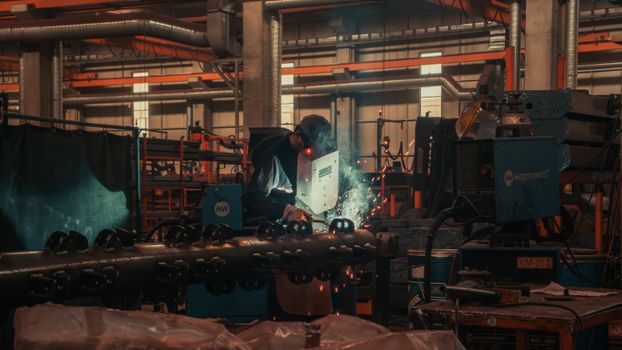
Many Czech companies, especially small and medium-sized enterprises (SMEs), have opted for incremental automation. Rather than replacing human labor wholesale, they have integrated selective technologies to support, not supplant, their workforce. This measured approach encourages employees to engage in creative tasks, experiment with processes, and develop novel solutions—key ingredients for innovation.
The Czech Republic’s position as a hub for automotive, machinery, and electronics production has also driven a culture of adaptability. With frequent changes in demand and customer specifications, flexible, human-centered processes often outperform rigid, fully automated lines.
How Low Automation Sparks Creativity and Problem Solving
Innovation thrives where there is room for experimentation and adaptation. In highly automated environments, processes are optimized for speed and consistency, leaving little space for individual initiative or trial-and-error learning. In contrast, Czech firms with lower automation benefit from:
1. Employee Engagement and Ownership: Without full automation, workers are involved in more stages of the production process. This involvement gives them a sense of ownership and an opportunity to suggest improvements based on hands-on experience. For example, ŠKODA AUTO’s “Simply Clever” solutions, like integrated umbrellas and door-edge protectors, were inspired by employee suggestions. 2. Rapid Prototyping and Customization: Lower automation allows for easier adjustment of processes to meet unique customer requirements. Czech engineering firms have earned a reputation for producing highly customized machinery and components, with 38% of local manufacturers reporting that their ability to tailor solutions is a key competitive advantage (Czech Statistical Office, 2023). 3. Learning from Mistakes: Manual and semi-automated operations make it easier to identify bottlenecks and test new process tweaks. When a problem arises, teams can brainstorm and implement solutions quickly—something that’s often costly and slow in fully automated plants.The Human Element: Skilled Workforce as Innovation Drivers
The Czech Republic has long prided itself on a well-educated, technically skilled workforce. According to Eurostat, over 70% of Czech workers in the industrial sector have completed vocational or technical education—one of the highest rates in Europe.
Unlike in highly automated settings where repetitive tasks dominate, Czech employees in low-automation environments are more likely to be engaged in complex problem-solving and process optimization. This not only keeps employees motivated but also serves as a powerful engine for innovation.
Several Czech companies have established internal innovation programs, encouraging workers to submit ideas for process improvements or new products. For example, the family-owned company Linet, a global producer of hospital beds, regularly collects and implements employee suggestions, leading to over 50 incremental product improvements between 2018 and 2022.
Balancing Flexibility and Efficiency: A Comparative Perspective
How does the low-automation approach in Czech companies compare to highly automated counterparts in terms of innovation? The following table highlights some key differences:
| Aspect | Low Automation (Czech Companies) | High Automation (Global Leaders) |
|---|---|---|
| Speed of Adaptation | High—processes can be rapidly adjusted | Slower—requires reprogramming and investment |
| Employee Involvement | High—workers contribute ideas and improvements | Low—limited to machine monitoring |
| Customization Capability | Easy to implement bespoke solutions | Difficult—lines optimized for mass production |
| Cost of Innovation | Lower—experiments can be done manually | Higher—requires technical changes and downtime |
| Long-Term Scalability | Challenging for large volumes | Excellent for mass production |
This comparison illustrates that while high automation excels in volume and consistency, low automation provides a unique edge in adaptability and creative problem-solving.
Case Studies: Czech Innovations Born from Low Automation
Several Czech companies demonstrate how limited automation has directly led to innovative breakthroughs:
- TON, a traditional bentwood furniture manufacturer, relies on skilled craftsmen for key stages of production. The company has introduced over a dozen new chair and table designs since 2017, many of which originated from worker suggestions on how to improve ergonomics or durability. - Mitas, a tire producer, uses semi-automated lines for custom tire orders. This approach enabled the company to pivot quickly during the COVID-19 pandemic, developing specialized tires for medical transport vehicles in record time. - KOMA Modular, which builds modular construction units, employs teams that combine manual assembly with digital tools. Their hybrid approach allowed them to develop the award-winning “Smart Module” system, which was rapidly prototyped and brought to market in under a year.These examples show that innovation is not just about technology—it’s about the ability to respond to challenges creatively, something that low automation often makes possible.
The Role of Collaboration and Knowledge Sharing
Another factor that sets Czech companies apart is their collaborative spirit. With less automation, teams must coordinate closely, sharing insights and troubleshooting together. This culture of knowledge sharing extends beyond company walls. Industry associations like the CzechInvest Agency and the Association of Small and Medium-Sized Enterprises regularly host roundtables, workshops, and innovation challenges.
According to a 2022 survey by the Confederation of Industry of the Czech Republic, 62% of Czech firms reported participating in inter-company innovation projects—significantly above the EU average of 47%. These collaborations often lead to cross-pollination of ideas and faster implementation of novel solutions.
Moreover, partnerships with universities and technical institutes are common. Companies provide real-world problems for students to solve, often leading to fresh approaches and the development of new technologies that blend manual expertise with digital tools.
The Future: Evolving Automation and Sustaining Innovation
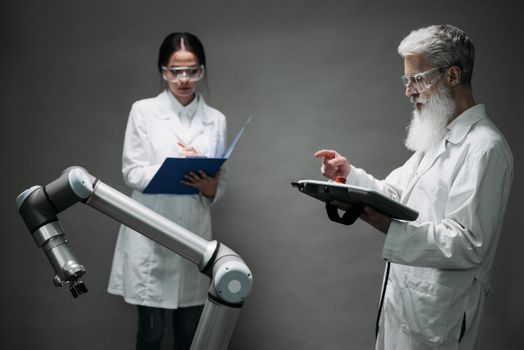
While low automation has clear benefits for innovation, Czech companies are not ignoring technological progress. Instead, many are adopting a hybrid approach, integrating targeted automation in areas where it enhances, rather than replaces, human creativity. For instance, collaborative robots (“cobots”) are increasingly used to handle repetitive tasks, freeing up workers for more complex, value-added activities.
Digitalization initiatives, such as the implementation of Industry 4.0 principles, are also being tailored to fit the Czech context. Rather than wholesale automation, companies invest in data analytics, digital twins, and simulation tools that help optimize human-driven processes.
Looking ahead, the Czech innovation model may serve as a blueprint for other countries seeking to balance efficiency with creativity. By maintaining a strong human element and fostering a culture of collaboration and adaptability, Czech businesses are well-positioned to continue producing world-class innovations—even in an era of rapid technological change.
Final Reflections on Low Automation and Innovation in Czech Companies
The Czech experience demonstrates that low automation, far from being a liability, can be a catalyst for innovation. By preserving the central role of skilled employees, encouraging experimentation, and building a culture of collaboration, Czech companies have turned a perceived weakness into a formidable strength. As the global business landscape evolves, the Czech approach offers valuable lessons on how to harness the power of human ingenuity in a technologically advanced world.