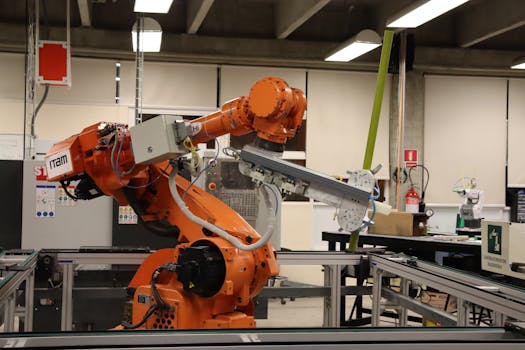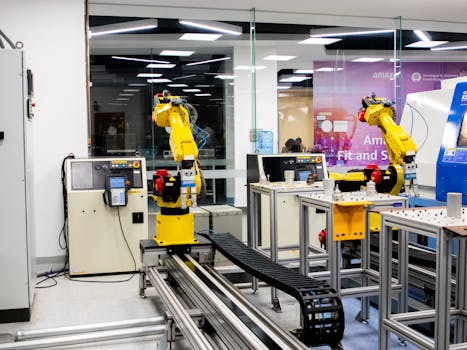
The automobile industry is often associated with cutting-edge robotics, high-speed assembly lines, and the relentless march toward total automation. Yet, despite this futuristic image, a significant portion of the sector still relies on low automation processes. From specialized manufacturing to small-scale assembly and custom vehicle production, low automation continues to play a vital—if sometimes overlooked—role in shaping the modern automotive landscape.
Understanding Low Automation in the Automobile Sector
Low automation refers to manufacturing processes where manual labor and human oversight are dominant, with minimal reliance on robotic or automated systems. In the context of the automobile industry, low automation is evident in several areas:
- Niche or luxury car manufacturing, where customization is key - Production in developing markets with lower labor costs - Assembly of complex components not suited for automation - Early-stage prototyping and design workshopsAccording to the International Federation of Robotics (IFR), as of 2023, global robot density in the automotive industry reached 1,457 robots per 10,000 employees. However, this figure conceals wide disparities: while German car factories may boast near-total automation, many plants in Asia, Africa, and South America still rely heavily on human workers.
The persistence of low automation isn’t just a matter of economics; it also reflects strategic choices, market demands, and technical realities that make manual labor indispensable.
Key Drivers Behind Low Automation in Automobile Manufacturing
Why does low automation persist in an industry that has pioneered so many advances in robotics? Several factors drive this ongoing reliance on human labor:
1. $1 For smaller manufacturers or those operating in regions with low labor costs, investing in expensive automated machinery may not make financial sense. A 2022 Deloitte report found that automating a single vehicle assembly line can cost between $5 million and $10 million, a sum that only makes sense for high-volume manufacturers. 2. $1 Luxury and performance car brands, such as Rolls-Royce and Aston Martin, often rely on low automation because their customers demand bespoke features. Human workers can adapt to one-off specifications and intricate designs, whereas robots are best suited for repetitive, uniform tasks. 3. $1 Certain assembly steps—such as wiring harness installation or interior fitting—are difficult to automate because they require dexterity, adaptability, and problem-solving skills that robots currently lack. 4. $1 In emerging economies, governments sometimes encourage low automation to maximize job creation. For instance, India's automobile sector employed over 1.3 million people in 2023, many in roles that remain difficult to automate.Comparing Low Automation and High Automation in Automotive Production
To understand the trade-offs between low and high automation, it's helpful to compare their key attributes side by side. The table below highlights several important differences:
| Aspect | Low Automation | High Automation |
|---|---|---|
| Initial Investment | Low (manual tools, basic equipment) | High (robots, sensors, software) |
| Labor Costs | High (more workers required) | Lower (fewer workers needed) |
| Production Speed | Slower (manual assembly) | Faster (continuous, automated) |
| Product Customization | High (adaptable, flexible) | Low (best for mass production) |
| Error Rate | Variable (dependent on training) | Low (consistent, repeatable) |
| Scalability | Limited (hard to ramp up quickly) | High (easy to increase output) |
While high automation is synonymous with efficiency and uniformity, low automation allows for flexibility and craftsmanship. This is why, even as automation becomes more affordable, low automation remains a strategic choice for certain segments.
Case Studies: Where Low Automation Excels in the Auto Industry
Low automation is not simply a relic of the past; it is essential in several specialized areas of the automotive world. Here are some real-world examples:
1. $1 Brands such as Bentley and Bugatti rely on skilled artisans to assemble interiors by hand, install custom upholstery, and apply unique finishes. For instance, a single Bentley can take up to 130 hours of manual labor just for the interior. 2. $1 Prototypes and concept vehicles often require unique parts and experimental designs that aren’t feasible to automate. In 2021, Mercedes-Benz’s Vision AVTR concept car was assembled almost entirely by hand due to its unconventional design. 3. $1 Classic car restoration companies, such as Singer Vehicle Design, utilize traditional methods to rebuild and upgrade vintage vehicles. This process is inherently low-automation, requiring expert craftspeople. 4. $1 In countries such as India and Brazil, cars like the Suzuki Alto or Renault Kwid are assembled with a higher degree of manual labor. This keeps costs low and supports local employment.These cases underscore that low automation can support innovation, uniqueness, and adaptability—qualities not easily replicated by fully automated processes.
The Impact of Low Automation on Workforce and Skill Development
One of the most significant effects of low automation in the automobile industry is its influence on employment and skills. While high automation can lead to job displacement, low automation environments foster the following:
- $1 According to the International Labour Organization, the global auto industry directly employs over 14 million people, with millions more in related supply chains. Low automation plants support a larger share of these jobs. - $1 Craftsmanship, problem-solving, and adaptability are skills honed in low automation settings. In luxury car workshops, for example, workers often undergo years of apprenticeship. - $1 Factories with low automation requirements can act as economic anchors in regions with limited alternative employment opportunities.However, this dependence on manual labor can also pose challenges. Workers must be continually trained to keep pace with evolving technologies, and the repetitive nature of some tasks can lead to fatigue and injury if not managed properly.
Quality, Safety, and Innovation: The Double-Edged Sword of Low Automation
Low automation brings both benefits and risks in terms of product quality, safety, and innovation:
- $1 Human workers can identify subtle defects or inconsistencies that machines might miss, especially in custom or luxury builds. Yet, manual processes can also introduce variability and human error. In 2022, the National Highway Traffic Safety Administration (NHTSA) attributed around 10% of automotive recalls in the U.S. to assembly errors. - $1 Manual assembly requires strict adherence to safety protocols. According to the U.S. Bureau of Labor Statistics, the rate of workplace injuries in motor vehicle manufacturing was 3.2 per 100 full-time workers in 2022—higher than in many other manufacturing sectors. - $1 Low automation processes allow for greater creativity and rapid prototyping. Designers and engineers can tweak products on the fly, testing new concepts without the need to reprogram robots or retool entire lines.For automakers, the challenge is to strike the right balance—leveraging the strengths of human labor while minimizing its risks.
The Future Outlook: Will Low Automation Endure?
As artificial intelligence, machine vision, and advanced robotics become more affordable, it’s tempting to imagine a future where low automation disappears entirely. Yet, evidence suggests that low automation will continue to play a vital role—albeit in a more specialized capacity.
- $1 Many automakers are adopting flexible production lines that combine robotic systems with skilled human operators. This approach maximizes efficiency while retaining adaptability. - $1 As consumers seek more personalized vehicles, the value of human craftsmanship is likely to increase, especially in premium segments. - $1 In countries where labor remains inexpensive and automation costs are high, low automation will likely persist for years to come.By 2030, industry analysts predict that up to 20% of automotive manufacturing globally will still depend largely on manual or semi-automated processes.