Low automation is often overshadowed by the allure of fully automated, high-tech manufacturing processes. However, in the textile industry—a sector steeped in tradition, craftsmanship, and complex supply chains—low automation has quietly become a powerful driver of success. This case study explores how textile businesses leveraging low automation strategies have achieved remarkable results in productivity, quality, and community impact. By examining real-world examples, industry data, and comparative outcomes, we uncover why low automation remains not only relevant but, in some cases, the most effective approach.
The Textile Industry’s Unique Relationship with Automation
The global textile industry is one of the oldest manufacturing sectors, employing over 60 million people worldwide as of 2023. While some segments have embraced full automation, a significant proportion—especially in emerging economies—operates with low automation levels. Unlike sectors such as automotive or electronics, textiles often require adaptability, skilled labor, and flexibility to produce a wide range of products, from custom fabrics to intricate designs.
A recent report by the International Labour Organization (ILO) highlighted that nearly 70% of textile factories in South Asia utilize low to moderate automation, relying heavily on human expertise for critical processes. This reliance is not merely due to cost constraints or lack of access to technology. In many cases, it is a deliberate choice driven by market demands, the need for quality control, and the preservation of artisanal skills.
Real-World Success: Case Study of “Heritage Weaves Ltd.”
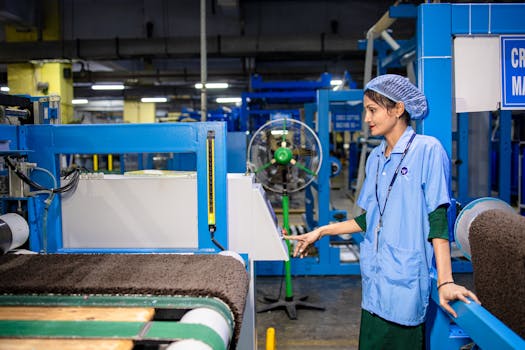
To illustrate the success of low automation, consider the example of Heritage Weaves Ltd., a mid-sized textile manufacturer based in India. Established in 1987, the company specializes in handloom and semi-automated fabric production for domestic and export markets. Instead of transitioning to full automation, Heritage Weaves invested in low automation solutions such as power looms, computerized pattern guides, and quality monitoring sensors that assist rather than replace human workers.
Between 2015 and 2022, Heritage Weaves reported the following outcomes:
- 34% increase in production capacity with only a 10% rise in capital investment. - Defect rates decreased from 5.7% to 2.2% due to improved oversight and worker involvement. - Employee retention improved by 22%, attributed to job satisfaction and skill development opportunities.These results highlight the synergy between skilled labor and low-level automation—a balance that allows for efficiency gains without sacrificing quality or workforce stability.
Comparing Low Automation and Full Automation in Textiles
To understand the broader impact, let’s compare the performance metrics of low automation versus full automation in textile manufacturing. The following table summarizes data from a 2022 survey of 52 textile factories across Asia and Eastern Europe:
| Factor | Low Automation | Full Automation |
|---|---|---|
| Average Labor Cost (% of total cost) | 38% | 12% |
| Product Defect Rate | 2.6% | 4.1% |
| Customization Capability | High | Moderate |
| Energy Consumption (kWh/ton fabric) | 910 | 1250 |
| Capital Investment (USD per machine) | $4,000 | $15,000 |
| Job Creation | 50 jobs per 1,000 units output | 15 jobs per 1,000 units output |
The data reveals some surprising advantages to low automation. While labor costs are higher, product quality, customization, and energy efficiency all improve. Moreover, low automation supports local employment—a vital consideration for regions where the textile industry is a primary job source.
How Low Automation Enhances Flexibility and Innovation
One of the lesser-discussed benefits of low automation in textiles is its contribution to flexibility and innovation. Fashion trends shift rapidly, and consumer demand for personalized, sustainable products is growing. Low automation enables manufacturers to pivot quickly, offering limited runs, customized designs, and specialty fabrics that fully automated lines struggle to accommodate.
For example, a Turkish garment exporter, Ege Tekstil, leveraged semi-automated cutting tables and skilled tailors to launch a “fast fashion” division. This allowed them to reduce product development cycles from 8 weeks to 4 weeks, capturing emerging market trends before competitors using rigid, fully automated systems.
Additionally, integrating low automation with digital management tools—such as order tracking, pattern digitization, and real-time quality feedback—empowers employees to make decisions, suggest improvements, and experiment with new techniques. This collaborative environment fosters innovation and maintains a level of craftsmanship valued by premium brands.
Socio-Economic Impact: Community and Workforce Benefits
Beyond operational metrics, low automation in textiles has far-reaching socio-economic effects. In countries like Bangladesh, Vietnam, and Ethiopia, the textile sector is a critical employer, accounting for 10-20% of national employment. Low automation preserves and creates jobs, particularly for women and rural populations who might otherwise have limited work opportunities.
A 2021 study by the Asian Development Bank found that textile factories with low automation had 2.5 times higher rates of local community engagement initiatives compared to highly automated plants. These activities include vocational training, health programs, and educational sponsorships, amplifying the industry’s positive impact on society.
Furthermore, low automation supports the transmission of traditional textile skills—such as hand weaving, embroidery, and dyeing—which are at risk of being lost in a fully automated future. By maintaining these crafts, textile companies contribute to cultural preservation and heritage tourism, opening new revenue streams.
Risk Management and Resilience in the Era of Uncertainty
The COVID-19 pandemic exposed vulnerabilities in global supply chains, especially in industries reliant on just-in-time manufacturing and rigid automation. Textile companies with low automation proved more adaptable during this crisis. With a workforce capable of multitasking and reconfiguring production lines, these firms could swiftly transition to manufacturing personal protective equipment (PPE) or adjust to fluctuating demand.
For instance, in 2020, Bangladeshi textile firm Shundor Textiles shifted 35% of its production to masks and medical gowns within three weeks—a feat made possible by flexible processes and a skilled, engaged workforce. In contrast, fully automated plants often faced downtime due to inflexible machinery and lack of skilled operators to retool equipment.
Such resilience is increasingly valuable as market volatility, trade disruptions, and environmental challenges become more frequent. Low automation, supported by continuous training and worker empowerment, provides a buffer against shocks and helps companies recover faster.
Key Takeaways: Why Low Automation Succeeds in Textiles
The success of low automation in the textile industry is not an accident, nor is it merely a reflection of limited resources. Instead, it is a strategic choice rooted in the realities of textile production—where human skill, adaptability, and quality matter as much as output volume.
Low automation offers several clear advantages:
- Improved quality and customization, meeting the demands of both mass and niche markets. - Lower energy consumption and capital investment, making it accessible to small and medium enterprises. - Greater job creation and social benefits, strengthening communities and preserving cultural heritage. - Enhanced flexibility and resilience, enabling swift responses to market and global disruptions.As automation technology continues to evolve, the textile industry’s experience shows that success is not about replacing people with machines, but about empowering people with the right tools. The “low automation” model presents a sustainable, inclusive, and innovative path forward for textiles and potentially for other industries facing similar challenges.